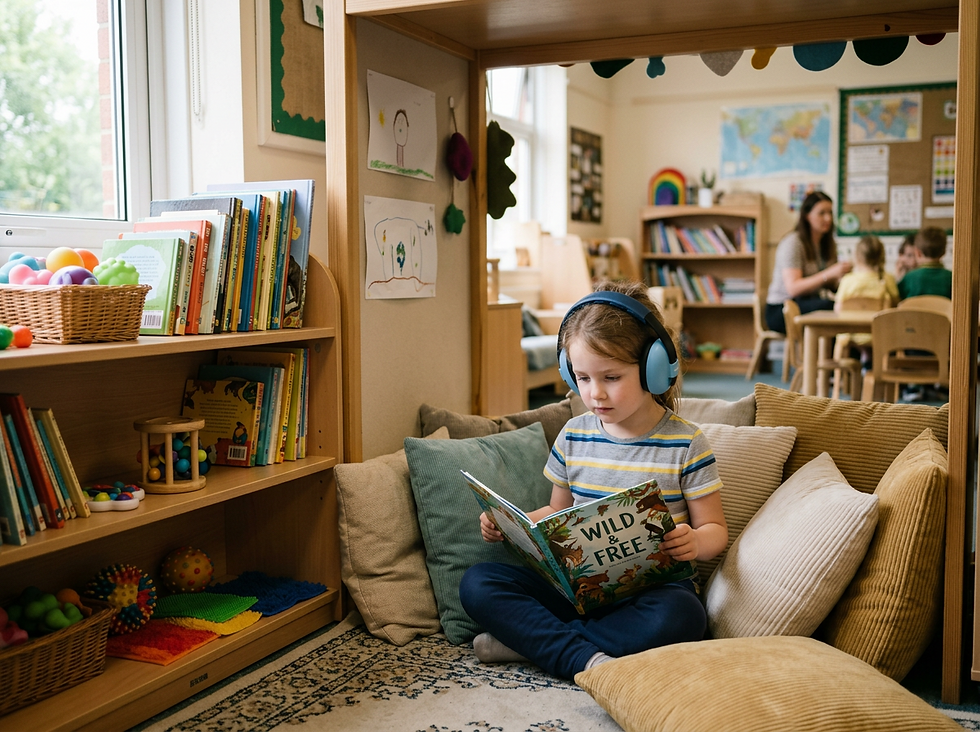
Creating a Sensory Friendly Home for Children
Home should feel safe, predictable and restful. For many children with autism, ordinary household sounds, bright lights, clutter, scratchy fabrics or busy routines can make the home feel harder to manage.
A sensory-friendly home does not need to look like a therapy room. It does not need expensive equipment or a complete redesign. Small, thoughtful changes can reduce sensory overload and help children feel more settled. The aim is to create spaces that match a child’s sensory needs, while still working for daily family life.
Every child is different. Some children seek pressure, movement or strong textures. Others need less noise, softer lighting and simple surroundings. The best starting point is observation. Notice what your child avoids, what they return to, what helps them calm, and what seems to trigger distress.
This guide shares practical ideas families can use at home. It is for information only and should not replace professional advice. For tailored support, Clinic Autism London can help families understand sensory needs and plan changes that fit the child, the home and the wider routine.

Start by understanding your child’s sensory profile
Before moving furniture or buying new items, look at how your child responds to everyday sensory input. Sensory differences can affect sound, touch, sight, smell, taste, balance and body awareness.
Some children may be overwhelmed by:
Loud appliances, hand dryers or sudden noises
Bright ceiling lights or flickering bulbs
Strong smells from cleaning products or cooking
Clothing labels, seams or certain fabrics
Crowded shelves, patterned wallpaper or visual clutter
Unexpected touch, messy play or crowded rooms
Other children may seek more input, such as:
Jumping, spinning or rocking
Chewing safe items
Carrying heavy objects
Liking firm hugs or deep pressure
Seeking textured toys or sensory play
Watching moving lights or water
A simple sensory diary can help. For one or two weeks, write down what happens before and after difficult moments. Look for patterns. A meltdown after school may link to hunger, tiredness, a noisy journey home or the sudden change from school structure to home freedom.
Useful questions include:
Which room does the child avoid?
Where do they naturally go when they feel calm?
What sounds, smells or textures seem difficult?
What activities help them regulate?
Which times of day feel hardest?
This information makes home changes more targeted. It also helps when speaking with professionals, including occupational therapists, autism specialists or the team at Clinic Autism London.
Organise spaces to reduce sensory overload
A cluttered space can feel noisy, even when the room is silent. Too many toys, colours and objects compete for attention. For a child who processes sensory information differently, this can quickly become tiring.
A sensory-friendly home starts with clear organisation.
Give each area a simple purpose
Try to make the function of each space obvious. A child should be able to understand what happens in the room without too many verbal instructions.
For example:
A reading corner has books, soft seating and gentle lighting.
A play area has a small number of toys in labelled boxes.
A dressing area has clothes organised in a predictable order.
A mealtime space has a clear table, familiar chair and minimal distraction.
Rooms do not need to be large. Even a small flat can have clear zones. A rug, shelf, curtain or storage unit can mark a boundary.
Rotate toys instead of displaying everything
Too many choices can overwhelm children and make play less focused. Keep a small number of toys available and store the rest out of sight. Rotate them every week or two, based on interest and need.
Open shelves can work well if they are not crowded. Clear boxes may help some children see what is inside. Other children may feel calmer with opaque boxes because the visual field looks simpler.
Picture labels can support independence. A photo of blocks on a box is often easier to understand than written text alone.
Create visual calm at child height
Adults often notice clutter on kitchen worktops or tables. Children notice what sits at their eye level. Look around from your child’s height. Busy posters, piles of toys, tangled cables, bright packaging and crowded shelves may be more intense than they seem from above.
Aim for:
Fewer items on display
Plain storage containers
Clear walkways
Soft lighting where possible
One main activity set up at a time
This does not mean a home must be spotless. It means reducing the kind of clutter that adds unnecessary sensory load.
Make transitions easier
Many children with autism find transitions hard, especially when they involve a sensory shift. Moving from a quiet bedroom to a noisy kitchen, or from screen time to bath time, can be difficult.
Support transitions with:
Visual schedules
Countdown warnings
A consistent order of activities
A transition object, such as a favourite toy
Calm lighting and reduced background noise
If mornings are stressful, prepare as much as possible the night before. Lay out clothes, pack bags and keep breakfast choices simple.
Choose calming colours, lighting and textures
Colour and texture can change how a room feels. Some children are highly sensitive to visual stimulation, while others enjoy strong contrasts. The goal is not to follow a design trend. The goal is to create a sensory environment that works for the child.
Use soft, steady colours
Many families find that muted shades help create calm. Soft greens, blues, warm neutrals, gentle greys and earthy tones often feel less intense than bright red, orange or neon colours.
This does not mean the home must be colourless. A child may love bright colours, and that preference matters. The key is balance. If a child enjoys strong colours, use them in smaller areas, such as a cushion, toy basket or artwork, rather than across every wall.
Bedrooms and quiet spaces often benefit from calmer colours. Play spaces can allow more energy, as long as the child can leave when they need a break.
Reduce harsh lighting
Lighting can be a major trigger. Bright overhead lights, flicker, glare and strong contrast can make a room uncomfortable.
Try these changes:
Use lamps instead of only ceiling lights.
Choose warm white bulbs rather than very cool white light.
Add blackout curtains if outside light affects sleep.
Use dimmable lamps where safe and practical.
Reduce glare from screens, mirrors or shiny surfaces.
Some children are sensitive to flicker from certain bulbs. If a child often squints, covers their eyes or avoids a room, lighting may be part of the issue.
Choose textures with care
Texture can soothe or irritate. A soft blanket can feel comforting to one child and unbearable to another. Involve the child when possible. Let them touch fabrics before buying bedding, cushions, rugs or clothes.
Calming textures may include:
Cotton sheets
Seamless or soft clothing
Smooth wooden toys
Fleece blankets, if the child likes them
Weighted blankets only when suitable and advised
Low-pile rugs that are easy to clean
Avoid assuming that “soft” always means comfortable. Some children dislike fluffy textures or loose fibres. Others seek them out. Follow the child’s response.
Pick sensory-friendly furniture and toys
Furniture and toys can support comfort, movement and self-regulation. The best options are safe, age-appropriate and suited to the child’s sensory needs.

Look for supportive seating
Some children sit better when their body feels grounded. Others need movement to stay regulated.
Helpful options may include:
A firm beanbag for deep pressure
A wobble cushion for seated movement
A rocking chair used with supervision
A small tent or canopy chair for a sense of enclosure
A footrest at the dining table so feet are supported
Floor cushions for flexible seating
Good seating can help during homework, meals, reading or quiet play. The right setup can reduce fidgeting, improve comfort and lower frustration.
Use movement safely
Movement is a powerful sensory tool for many children. Some seek vestibular input through swinging, spinning or rocking. Others prefer heavy work, such as pushing, pulling and carrying.
At home, safe movement options might include:
A mini trampoline with supervision
Animal walks along a hallway
Carrying laundry in a basket
Wall pushes
A therapy ball used with adult support
A safe garden swing, if space allows
Create rules around movement areas. For example, jumping happens on the trampoline, not the sofa. This protects the child while still meeting the sensory need.
Choose toys with a clear purpose
Sensory toys can be helpful, but more is not always better. Choose items that support a need you have noticed.
For calming:
Liquid timers
Soft putty
Simple puzzles
Fidget toys with quiet movement
Books with predictable rhythm
For tactile input:
Textured balls
Sensory bins with rice, pasta or fabric pieces
Finger paints, if tolerated
Play dough
Brushes or soft fabric squares
For heavy work:
Weighted soft toys
Push and pull toys
Stacking crates
Resistance bands, used safely
Large building blocks
For oral sensory needs, use safe chew items designed for that purpose. Avoid jewellery, toy parts or household objects that could break or become a choking risk.
Keep noise levels in mind
Some toys are marketed as exciting because they flash, sing and beep. These can be overwhelming, especially in small rooms.
If a noisy toy is loved, try placing tape over the speaker to soften the volume, choosing lower settings or setting a time limit. Noise-reducing ear defenders can also help in certain situations, such as hoovering, fireworks, travel or busy family gatherings.
Create quiet zones for relaxation
A quiet zone gives a child a place to reset before stress builds. It should not be used as punishment. It works best when the child sees it as safe, predictable and available.
The space can be a corner of a bedroom, a pop-up tent, a nook under the stairs, a curtained area in the living room or a small space beside a bookshelf.
Keep the quiet zone simple
A calm space does not need many items. Too much choice can turn it into another source of overload.
A quiet zone might include:
A soft mat or rug
A cushion or beanbag
A blanket
A favourite soft toy
A small basket of calming items
Soft lighting
Books or picture cards
Ear defenders, if useful
Keep screens out of the quiet zone if they make it harder for the child to settle. Some children do relax with a familiar audio story or calming music, so base this on the child’s response.
Teach the space when the child is calm
Do not wait for a crisis to introduce the quiet zone. Show it during a calm moment. Sit nearby, read a book, practise breathing or use a sensory toy together.
Use simple language, such as:
“This is your calm space.”
“You can come here when things feel too loud.”
“This is for resting.”
“I will check on you.”
Some children may need a visual card that says “break” or a picture of the quiet zone. Others may lead themselves there once they understand its purpose.
Respect the need for recovery time
After sensory overload, a child may need time before they can talk, eat, change activity or follow instructions. Give space where it is safe to do so. Reduce questions. Use a calm voice. Lower the lights or noise if possible.
Recovery is not avoidance. It is part of regulation.
Build routines that make the home feel predictable
The physical space matters, but routines also shape sensory comfort. Predictability helps many autistic children feel safer because they know what comes next.
Helpful routines can include:
A consistent morning order
A calm arrival routine after school
A visual bedtime sequence
Regular tidy-up times
Clear sensory breaks before difficult tasks
Advance warning before visitors arrive
A visual routine does not need to be complex. It can be a row of pictures on the fridge or a simple checklist on a whiteboard. Some children prefer objects of reference, such as a toothbrush to signal brushing teeth or pyjamas to signal bedtime.
Try to build sensory regulation into the day before overload happens. A child who seeks movement may benefit from jumping, pushing or carrying before sitting for homework. A child who is sound-sensitive may need quiet time after school before joining family activities.
Make changes one step at a time
It is tempting to change everything at once, especially when home life feels stressful. Start small. Choose one area and one goal.
For example:
Reduce visual clutter in the bedroom to support sleep.
Create a calm corner for after school.
Change harsh bedroom lighting.
Add a movement activity before homework.
Replace scratchy bedding with a preferred fabric.
Watch what changes. Does the child spend more time in the room? Do transitions feel easier? Are there fewer signs of distress? Do they use the quiet zone without prompting?
If something does not help, adjust it. Sensory-friendly design is a process, not a one-off project.
When professional support can help
Families often know their child best, but it can be hard to work out which sensory needs are driving behaviour. A child may refuse baths because of sound, water temperature, smell, balance, touch or the transition itself. The right support can make the pattern clearer.
Clinic Autism London can offer guidance for families who want help understanding autism-related needs and creating practical strategies at home. Support may include advice on routines, sensory triggers, communication, emotional regulation and next steps for assessment or therapy where appropriate.
Professional input can be especially helpful when:
Sensory distress affects sleep, eating, hygiene or school attendance
Meltdowns are frequent or intense
The child struggles with daily transitions
The family is unsure which changes to prioritise
Previous strategies have not worked
A nursery or school needs joined-up advice
A sensory-friendly home does not remove every challenge. It gives the child more chances to feel safe, understood and regulated. That can make everyday life calmer for the whole family.
A home that supports the child you have
The most effective sensory-friendly homes are not perfect. They are responsive. They reflect the child’s needs, preferences and stage of development.
Start by watching. Reduce clutter where it overwhelms. Choose colours, lighting and textures with care. Add furniture and toys that support regulation. Create a quiet zone that the child can trust. Keep routines clear and predictable.
Small changes can have a real effect when they match the child’s sensory world. For more individual guidance, Clinic Autism London can support families with practical advice and a clearer plan for creating a calmer home environment.