How Routine Supports Autistic Wellbeing and Reduces Anxiety with Clinic Autism
A change that seems small to one person can feel enormous to an autistic person. A delayed bus, a different breakfast, a cancelled lesson, a noisy shop, or an unexpected visitor can unsettle the whole day.
Routine is often misunderstood as rigidity. From a psychological perspective, it is better seen as a support system. Predictable routines can reduce uncertainty, lower anxiety, protect energy, and help autistic people move through daily life with more confidence. For many children, young people, and adults, routine is not a preference for sameness in a simple sense. It is a way of making the world feel safer and more understandable.
This article explores how routine supports autistic wellbeing, why it can reduce anxiety, and how families and professionals can build routines that are helpful rather than restrictive. It also looks at how Clinic Autism supports autistic individuals with comprehensive services, including practical help with establishing routines that fit real life.
This article is for general information only and is not a substitute for personalised clinical advice.
Why predictability matters so much
Autistic people often process sensory information, social cues, and change differently. Many also experience higher levels of anxiety, especially when they cannot predict what will happen next. Routine helps because it reduces the number of unknowns the brain has to manage.
A structured routine answers practical questions before they become stressful.
What happens next?
How long will this last?
What do I need to do?
When can I rest?
What will change, and what will stay the same?
For an autistic child getting ready for school, these questions may sit underneath what looks like refusal, distress, or “not listening”. For an autistic adult, the same kind of uncertainty may show up as exhaustion, shutdown, irritability, or avoidance.
Psychologists often describe anxiety as a response to perceived threat or uncertainty. If the day feels unclear, the nervous system may remain on high alert. Routine can lower that alert state because it gives the person a reliable map.
This does not mean every minute must be planned. A useful routine creates enough structure to reduce stress while leaving room for choice, recovery, and natural changes.
The psychological benefits of routine
Routine supports wellbeing in several connected ways. It can help with emotional regulation, sensory planning, executive functioning, and a sense of control.
Routine lowers cognitive load
Executive functioning includes skills such as planning, starting tasks, switching attention, and keeping track of steps. Many autistic people find these tasks harder when they are tired, anxious, or overloaded.
A routine reduces the need to make repeated decisions. Instead of working out the morning from scratch each day, a person can follow a known pattern.
For example, a teenager who struggles with school mornings may benefit from a written or visual sequence:
Wake up
Wash
Dress
Eat breakfast
Check bag
Put on shoes
Leave
The routine does not remove the effort completely, but it makes the effort more predictable. Over time, this can reduce conflict at home and help the young person feel more capable.
Routine helps with emotional regulation
Regulation is the ability to manage energy, stress, emotion, and sensory input. It is not the same as being calm all the time. A regulated person can move through emotional states without becoming overwhelmed too quickly.
Structured routines can build regulation into the day. This may include:
quiet time after school
movement breaks between tasks
a predictable bedtime routine
regular meals and snacks
planned transitions before leaving the house
time alone after social demand
These supports can prevent distress from building quietly across the day. In many cases, routines work best when they include recovery time, not just tasks.
Routine creates a sense of control
Many autistic people describe sudden changes as deeply unsettling because they remove control. A routine gives back some of that control. It shows what is expected and what choices are available.
For young children, this might mean choosing between two tops after following a morning visual schedule. For adults, it might mean planning shopping at a quieter time of day and using the same route each week.
Choice matters. A routine imposed without the person’s input can feel restrictive. A routine built with the person can feel supportive.
A helpful clinical principle is to use routine to increase safety and independence, not to force compliance.
This distinction is essential. Good routines respect autonomy.
Real-life examples show how routine helps
Every autistic person is different, so routines need to match the person, not the diagnosis. The following examples are anonymised and realistic composites based on common experiences reported by families and clinicians.
A calmer school morning
Amira, aged 7, often became distressed before school. Her parents thought the problem was school itself, but closer observation showed that the hardest part was the rushed and unpredictable morning.
Some days breakfast came before getting dressed. Other days her uniform was still drying. Sometimes her younger sibling interrupted her while she was brushing her teeth. By the time she reached the front door, she was already overwhelmed.
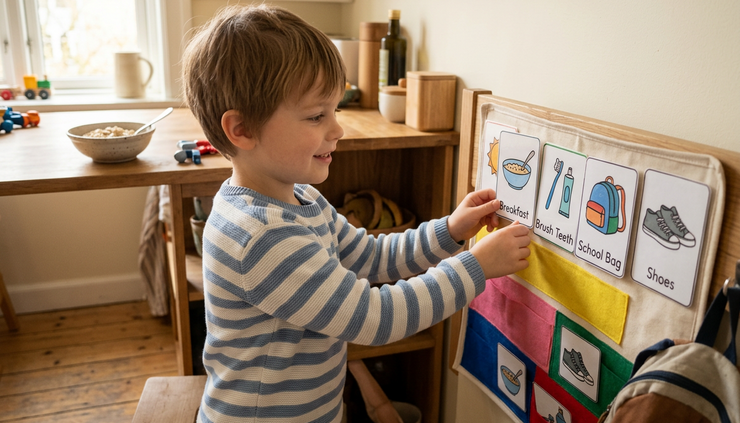
A clinician suggested creating a consistent sequence with picture cards. The family also prepared the uniform, school bag, and lunch items the night before. After breakfast, Amira moved through the same steps in the same order each day.
The change did not remove all difficult mornings. Illness, tiredness, and school events still affected her. But the number of distressed starts reduced. Her parents also felt less helpless because they understood the pattern behind the anxiety.
The key was not perfection. It was predictability.
An adult routine that protects energy
Daniel, an autistic adult, worked part-time and found social contact draining. He enjoyed his job, but the commute, bright lights, small talk, and task switching left him exhausted. At home he often skipped meals, then struggled to sleep.
A routine helped him protect energy across the whole day. He began using noise-reducing headphones on the commute, packed the same simple lunch, blocked quiet time after work, and followed a low-demand evening routine. He also planned household tasks for non-work days rather than trying to “push through” every evening.
This did not change who Daniel was. It changed the amount of stress placed on his nervous system. With fewer unplanned demands, he had more capacity for the things he valued.
A bedtime routine that supports sleep
Sleep can be difficult for many autistic children and adults. Sensory sensitivities, anxiety, transitions, and busy thoughts can all play a role.
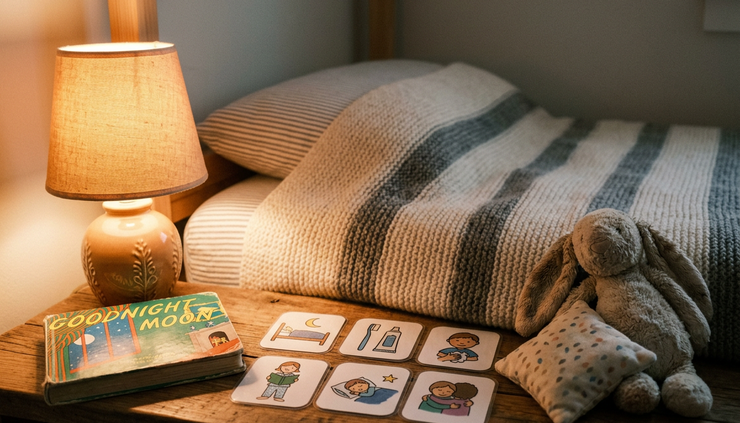
One family found that their child became distressed every night when asked to stop playing and get ready for bed. The transition felt abrupt. With professional guidance, they built a routine that started earlier and used clear signals:
dimmer lights
the same calming music
a five-minute warning before stopping play
a bath or wash
pyjamas
one story
a short goodnight phrase
The routine worked because it prepared the body and mind for change. It also gave the child repeated reassurance that bedtime would follow a known pattern.
When routine becomes too narrow
Routine can support wellbeing, but it can also become stressful if it leaves no room for life to happen. The goal is not to remove every change. The goal is to make change more manageable.
Clinicians often help families think about the difference between supportive structure and anxiety-driven restriction.
Supportive routines tend to:
reduce distress
increase independence
include the autistic person’s preferences
allow planned flexibility
make daily life easier for everyone
Routines may need review when they:
cause high distress if one small detail changes
prevent the person from doing valued activities
become more about avoiding all uncertainty than reducing overload
are used mainly to control behaviour rather than understand need
This is where expert support can be valuable. A psychologist, occupational therapist, speech and language therapist, or specialist autism practitioner can help identify what the routine is doing. Is it reducing sensory overload? Is it supporting communication? Is it easing transitions? Is it avoiding a fear that may need gradual support?
The answer shapes the plan.
Building flexibility gently
Flexibility should not be forced through sudden disruption. For many autistic people, unexpected change can feel threatening. A better approach is to prepare for change in small, respectful steps.
Helpful tools include:
visual calendars
social stories or written explanations
countdowns before transitions
“change cards” that show when something will be different
practice runs before new events
backup plans for common disruptions
clear reassurance about what will stay the same
For example, if a child always uses the same cup, immediately removing it may create distress and mistrust. A gentler approach might introduce a second cup during a calm moment, while keeping the original available. The aim is to expand tolerance without removing safety.
For adults, flexibility may involve planning alternatives. If the usual bus is cancelled, what is the next safest option? If a supermarket is too noisy, what quieter time or delivery option is available? Prepared alternatives reduce panic because the person is not forced to problem-solve from a place of overload.
How Clinic Autism supports effective routines
Clinic Autism provides comprehensive support for autistic children, young people, adults, and their families. Routine is often part of that support because it touches so many areas of life, including sleep, school, work, communication, eating, sensory needs, relationships, and emotional wellbeing.
Support may include assessment, guidance, therapy, family consultation, and practical strategies tailored to the individual. Rather than offering a one-size-fits-all routine, the focus is on understanding the person’s profile.
That means asking questions such as:
What parts of the day are most stressful?
Which sensory experiences are tiring or painful?
How does the person communicate distress?
What helps them feel safe?
Which routines already work well?
Where does the person need more choice?
What changes are unavoidable and need planning?
Clinic Autism can help families and individuals build routines that are realistic, respectful, and sustainable. For a young child, that might involve visual supports and transition strategies. For a teenager, it may include planning around school demands, friendships, homework, and recovery time. For an adult, it could involve routines for work, self-care, appointments, travel, or independent living.
A strong routine should fit the person’s needs, strengths, and environment. It should also be reviewed as life changes. Starting school, moving home, beginning work, puberty, exams, family changes, or health difficulties can all affect how much structure a person needs.
The value of specialist support lies in seeing the whole picture. Behaviour is not treated as the main problem. It is understood as communication. Anxiety is not dismissed as overreaction. It is explored with care. Routine is not presented as a cure. It is used as one practical way to support autistic wellbeing.
Practical ways to create a helpful routine
A good routine starts with observation. Before changing anything, notice where stress builds. Look for patterns across several days.
Useful questions include:
When does anxiety rise?
What happens just before distress?
Are there sensory triggers?
Are instructions too vague?
Is the transition too sudden?
Is the person tired, hungry, or overloaded?
Is there enough time to recover?
Once the pattern is clearer, start small. A full-day schedule may help some people, but others need one routine for one difficult moment.
Morning, bedtime, mealtimes, school transitions, shopping trips, and appointments are common starting points.
Make the routine visible
Many autistic people benefit from visual information because spoken instructions can disappear quickly, especially under stress. Visual supports may include pictures, objects, written lists, calendars, timers, or apps.
The best format depends on the person. A young child may use photos. A teenager may prefer a discreet checklist. An adult may use a phone calendar and reminders.
Keep language clear
Vague phrases can increase anxiety. Clear language helps.
Instead of saying, “We’re leaving soon,” it may help to say, “We are leaving in ten minutes. First shoes, then coat, then car.”
Instead of saying, “Be ready,” try, “Please put your laptop in your bag and put on your shoes.”
Specific instructions reduce guesswork.
Build in regulation
A routine that only lists demands may not help. It should include breaks and calming activities. This is especially true after school, work, shopping, appointments, or social events.
Regulation might involve quiet time, movement, pressure input, a favourite activity, time outdoors, or reduced conversation. The right option depends on the person.
Prepare for change
No routine can remove all uncertainty. Build change into the routine by showing what might happen when plans shift. Some families use a “something different” card. Some adults keep written backup plans. The aim is to make change expected sometimes, rather than shocking every time.
Routine can be a form of care
Routine is often most powerful when it is quiet and ordinary. The packed bag by the door. The same goodbye phrase. The visual plan on the fridge. The regular pause after school. The familiar route to an appointment. These small supports can make the world feel less chaotic.
For autistic people, routine can reduce anxiety because it lowers uncertainty, supports regulation, and protects energy. It can also build confidence, especially when the routine includes choice and respects the person’s needs.
Clinic Autism plays an important role in helping individuals and families understand what sits beneath daily stress and how effective routines can support wellbeing. With thoughtful guidance, routine becomes more than a schedule. It becomes a practical, compassionate way to make life feel safer and more manageable.