Long NHS Waiting Lists: The Hidden Crisis in Autism & ADHD Diagnosis
A diagnosis should not be the door that takes years to open. Yet for many autistic people, people with ADHD, and families trying to support them, that is exactly how the system can feel.
Across the UK, demand for autism and ADHD assessments has risen sharply. More people now recognise neurodevelopmental differences earlier. Schools, GPs and employers are more likely to suggest assessment. Adults who were missed as children are also coming forward, often after years of anxiety, burnout, job instability or relationship strain.
Greater awareness is a good thing. The problem is that NHS services have not expanded at the same pace.
For many families, the wait is not just inconvenient. It can mean years without the right school support, workplace adjustments, medication options, therapy, benefits evidence or a clear explanation for daily struggles. It can leave parents second-guessing themselves and adults feeling as though they are failing at life when they are actually unsupported.
This article looks at why the waiting lists have become so long, what the delays mean in real life, and what could improve the current system.
The scale of the waiting list problem
NHS autism and ADHD services are under pressure from both sides: rising referrals and limited clinical capacity.
For autism, NHS England waiting time data has shown a very large and growing backlog. In recent years, published figures have recorded well over 170,000 people in England waiting for an autism assessment, with more than four in five waiting longer than the 13-week period set out in NICE guidance for a first appointment after referral.
That 13-week benchmark matters. It does not mean every person should receive a full diagnosis within 13 weeks, but it does show how far the current system has drifted from what timely access should look like.
For ADHD, national data has historically been less consistent than autism data, but the pressure is clear. NHS England has acknowledged rising demand, and an ADHD taskforce was announced to look at the growth in referrals and long waits. Across many areas, people report waits of months or years for assessment, especially adult ADHD services.
Several factors are driving the rise:
Better public awareness
More people understand that autism and ADHD can present differently across age, sex and background.
Adults seeking answers
Many adults now recognise patterns that were missed in childhood, including chronic disorganisation, sensory overload, emotional dysregulation, social exhaustion or masking.
School and workplace pressure
Families and adults often need formal evidence to access adjustments, support plans or specialist services.
Post-pandemic strain
Disrupted routines, school absence, anxiety and increased visibility of mental health needs pushed more people towards assessment.
Limited specialist staff
Assessment requires trained clinicians, time, multidisciplinary input and follow-up. There are not enough teams to meet current demand.
The result is a system where referral can feel like progress at first, then silence follows.
What long waits do to children and families
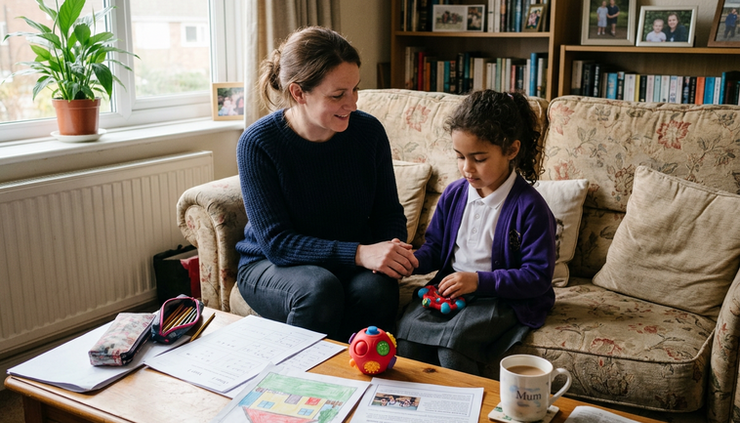
For children, waiting for an autism or ADHD assessment often means waiting for support at school.
Some schools do offer help based on need rather than diagnosis, and that is good practice. But many families still find that a formal diagnosis carries weight. It can affect access to specialist teaching, reasonable adjustments, Education, Health and Care Plan evidence, speech and language input, occupational therapy, behaviour support or exam arrangements.
Without that clarity, children may be seen as “difficult”, “rude”, “lazy” or “not trying”, when they are actually overwhelmed, under-supported or unable to meet expectations in the way the environment demands.
A long wait can lead to:
rising anxiety before school
meltdowns or shutdowns after masking all day
school refusal or reduced attendance
conflict at home
sleep problems
loss of confidence
parents reducing work hours to manage crises
siblings feeling the strain too
Parents are often left trying to become case manager, advocate, researcher and emotional anchor all at once.
One parent might spend the morning calling the GP, lunchtime emailing the SENCO, the afternoon collecting a distressed child, and the evening trying to fill in forms while worrying that the referral has disappeared into a queue. None of that shows up on a waiting list spreadsheet, but it becomes the family’s daily life.
A delayed assessment does not pause a child’s needs. It only delays the language, support and evidence that may help others understand those needs.
The emotional toll can be heavy. Families may feel guilt because they cannot “fix” the situation. They may feel anger because they did ask for help early. They may feel embarrassment when behaviour is judged in public. Over time, many feel exhausted by having to prove distress before support is offered.
Adults are being left without answers too
The waiting list crisis is not only about children.
Many adults seek autism or ADHD assessment after years of feeling different, struggling to keep up, or being treated for anxiety and depression without anyone asking whether neurodivergence might be part of the picture.
For some, assessment becomes urgent after a breaking point:
burnout after years of masking
repeated job loss or workplace conflict
difficulties managing money, time or admin
relationship breakdown
parenting stress
sensory overwhelm
chronic low self-esteem
mental health crisis
An adult ADHD diagnosis can open the door to medication assessment, coaching, workplace adjustments and self-understanding. An autism diagnosis can help with reasonable adjustments, communication needs, sensory planning, therapy approaches and identity. For many people, it brings relief: “There is a reason this has been so hard.”
When that answer is delayed for years, people can internalise the struggle.
They may blame themselves for not coping. They may avoid applying for jobs, asking for adjustments or returning to education. Some decide to pay privately, not because they can easily afford it, but because they feel they have no other route. Others cannot pay and remain stuck.
This creates a fairness problem. Access to timely diagnosis should not depend on income, postcode or the ability to navigate a complex system.

Why the system is struggling to keep up
The current assessment pathway was not built for the level of need now coming through.
Autism and ADHD assessments are careful clinical processes. They may involve developmental history, school reports, questionnaires, interviews, observation, screening for other conditions and discussion of mental health. For children, parents and teachers may contribute. For adults, clinicians may need evidence from childhood, which is not always easy to obtain.
That takes time, and it should. Good assessment matters. A rushed diagnosis can miss complexity, while a poor-quality report may not help the person access meaningful support.
The issue is not that clinicians are working too slowly. In many cases, teams are overwhelmed.
Several pressures overlap:
There are not enough trained assessors.
Specialist clinicians need training, supervision and protected time. Workforce gaps affect both autism and ADHD pathways.
Services vary by area.
A person in one NHS trust may wait far longer than someone in another. This postcode variation creates frustration and confusion.
Children and adults often sit in separate systems.
Transition from child to adult services can be patchy. Some young people age out of one pathway before assessment takes place.
Support is too diagnosis-dependent.
When practical help requires a formal label, waiting lists become even more high-stakes.
ADHD prescribing adds extra pressure.
Assessment is only one part of ADHD care. Medication titration and shared care arrangements with GPs need capacity too.
Private and NHS pathways do not always connect smoothly.
Some people pursue private assessment, then struggle to access NHS follow-up, medication review or recognition of reports, depending on local policy.
Clinics such as Clinic Autism London, and other independent autism and ADHD assessment providers, often hear from families who feel they have reached the end of their patience with the waiting process. While private assessment is not an option for everyone, the demand for it reflects a wider truth: people are seeking clarity because the public pathway is too slow for their level of need.
An anonymised example shows the strain.
A family referred their eight-year-old for an autism assessment after repeated school distress, sensory issues and social difficulties. While waiting, the child’s attendance dropped. The parents were told support could be explored, but several decisions were delayed because everyone was “waiting for the assessment”. By the time the appointment came closer, the child had already changed schools and the parents had reduced working hours.
Another adult, referred for ADHD assessment after years of missed deadlines and burnout, described the wait as “being told the answer might exist, but not being allowed to reach it yet”. That feeling is common. It is not just a queue. It is uncertainty stretched over months or years.
What would make the system better
There is no single fix. Long waiting lists reflect workforce shortages, rising need, funding gaps and the way support is organised. But there are practical improvements that could reduce harm while people wait.
Offer support before diagnosis
Children and adults should not have to wait for a formal diagnosis before receiving reasonable adjustments.
Schools, employers and services can act on observed needs. That might include:
quiet spaces
predictable routines
written instructions
movement breaks
sensory adjustments
flexible deadlines
reduced communication overload
support with planning and transitions
This approach would reduce pressure on families and make diagnosis less like a gatekeeping tool.
Create clearer waiting list communication
Many people hear nothing after referral. That silence adds stress.
Services could improve the experience by providing:
confirmation that the referral has been accepted
expected waiting time ranges
information on what happens next
guidance on gathering evidence
advice for schools, employers and families
crisis contacts if needs worsen
Even when waits remain long, clear communication helps people feel less abandoned.
Increase specialist workforce and training
More clinicians need training in autism and ADHD assessment across the lifespan. That includes how neurodivergence can present in women and girls, people from minority ethnic communities, people with learning disabilities, and those who mask heavily.
Investment should focus not only on assessors, but also on follow-up care. Diagnosis without post-diagnostic support leaves many people unsure what to do next.
Use triage without excluding quieter cases
Some people need urgent assessment because of severe distress, school breakdown, risk, or major functional impairment. Better triage can help prioritise those at highest risk.
But systems must avoid overlooking people who appear to be coping because they mask. A child who is quiet at school but distressed at home still needs help. An adult who holds a job while burning out privately still needs assessment.
Build stronger shared-care pathways
For ADHD, assessment links closely to medication and ongoing review. Clear shared-care agreements between specialist services and GPs can help, but only where GPs are supported and responsibilities are safe and realistic.
If shared care breaks down, patients can be left with a diagnosis but no stable treatment route.
Improve national data for ADHD waits
Autism waiting time data, while imperfect, gives a clearer picture of the backlog. ADHD services need more consistent national reporting too. Without reliable data, it is harder to plan staffing, funding and service design.
Better data would also make postcode gaps harder to ignore.
Support families while they gather evidence
The assessment process often asks families to provide school reports, developmental history, questionnaires and examples of daily difficulties. This can be overwhelming.
Services could offer simple templates, guidance videos, helplines or group information sessions. Small changes could reduce admin pressure and help clinicians receive better evidence.
What people can do while waiting
No one should have to manage alone, but there are steps that may help during a long wait.
Keep a dated record of needs and difficulties. Include examples from home, school, work and social situations. Note what helps as well as what makes things harder.
Ask schools or employers for adjustments based on need, not diagnosis. In many cases, support can begin before an assessment is complete.
Speak to a GP if anxiety, low mood, sleep problems or risk increases. A person can need mental health support while also waiting for a neurodevelopmental assessment.
Look for reputable charities and local support groups. Peer support can reduce isolation and help families learn practical strategies.
If considering a private assessment, check who carries it out, what standards they follow, what the report includes, and whether local NHS services will accept it for future care. This is especially important for ADHD medication pathways.
This article is for general information only and is not medical advice. Anyone worried about immediate risk or crisis should contact urgent NHS or emergency support.
Families need more than a place in a queue
The rise in autism and ADHD referrals reflects something important: more people are recognising needs that were once missed, dismissed or misunderstood. That progress should be welcomed.
But awareness without access creates its own harm.
A waiting list may look like an administrative problem from the outside. For the people on it, it can shape education, work, family life, mental health and identity. It can leave parents fighting for support with no certainty. It can leave adults wondering how different life might have been if someone had noticed sooner.
The answer is not to make diagnosis harder to reach. It is to build a system where assessment is timely, support starts earlier, and people are treated as credible when they say they are struggling.
Long waits will not be solved overnight. But every step towards clearer communication, better staffing, needs-led support and fairer pathways matters.
Families do not need sympathy alone. They need a system that stops leaving them in limbo.