Masking in Autism The Silent Struggle of Fitting In for Children and Adults
A child comes home from school, shuts the bedroom door, and melts down after holding it together all day. An adult smiles through a noisy meeting, copies everyone else’s body language, then spends the evening unable to speak. From the outside, both may seem “fine”. Inside, they may be exhausted.
This is often called autistic masking. It means hiding, suppressing, or changing natural autistic traits to fit into non-autistic expectations. Masking can include forcing eye contact, rehearsing conversations, copying facial expressions, sitting still despite sensory pain, or pretending a busy room is not overwhelming.
Masking can help someone get through a difficult moment. It can also come at a serious cost. For many autistic children and adults, including boys, girls, men, women, and non-binary people, masking becomes a daily survival strategy that affects mental health, identity, relationships, and access to support.
This article is for general information only and is not a substitute for clinical advice. If masking is affecting day-to-day life, a suitably qualified autism specialist can help.

What masking can look like in everyday life
Masking is not one single behaviour. It is often a mix of conscious effort, learned habits, and fear of standing out.
A child might notice that classmates laugh when they speak too honestly, flap their hands, or talk at length about a special interest. Over time, they may train themselves to stay quiet. They may copy the “right” tone of voice, hide stimming, or force themselves to join playground games they do not enjoy.
An adult may do something similar at university, work, social events, family gatherings, or even medical appointments. They may prepare scripts before a phone call. They may watch others closely to work out when to laugh. They may suppress panic in a supermarket because leaving suddenly would draw attention.
Common forms of masking include:
Copying social behaviour
Mirroring gestures, facial expressions, tone, or phrases to appear more socially typical.
Suppressing stimming
Holding back hand-flapping, rocking, pacing, finger tapping, or other self-regulating movements.
Forcing eye contact
Looking at someone’s eyes even when it feels painful, distracting, or intense.
Hiding sensory distress
Pretending bright lights, noise, smells, touch, or crowded spaces are manageable.
Rehearsing conversations
Planning jokes, greetings, answers, and facial expressions before speaking.
Camouflaging confusion
Nodding along when instructions are unclear, then struggling alone later.
Masking is not the same as “being polite” or “learning social skills”. Everyone adapts their behaviour to some degree. The difference is the level of effort, fear, and loss of self that masking can involve for autistic people.
For some, masking feels like acting all day without being allowed to leave the stage.
Children who mask are often missed
Autistic children who mask well can be overlooked, especially if they do not match narrow stereotypes of autism. They may do well academically, follow rules, or seem quiet and compliant. Teachers may describe them as “no trouble”. Parents may hear that their child is coping at school, while seeing a very different child at home.
This gap can be confusing and painful for families.
A child may hold in every sensory overload, social hurt, and moment of uncertainty during the school day. Once they reach home, where they feel safer, the mask drops. This can look like crying, anger, shutdown, refusal to speak, panic, or total exhaustion.
“At school, my daughter was described as mature and sensible. At home, she would sob because her socks felt wrong and she could not face going back the next day. We thought we were missing something. We were. She had been masking for years.” An anonymised parent account based on common clinical themes
Masking can affect boys and girls, but it may be recognised differently.
Some autistic girls learn early to copy peers, use rehearsed social scripts, or hide confusion behind quietness. Their interests may also look socially acceptable to adults, such as animals, books, celebrities, art, or friendship groups, so the intensity of the interest may be missed.
Some autistic boys mask too, especially if they are aware that their natural behaviours draw criticism. A boy may force himself to join football talk, suppress sensory discomfort, or hide anxiety through humour. Others may be labelled as disruptive when they can no longer mask, rather than understood as overwhelmed.
Children of any gender can mask. The key is to look beyond outward behaviour and ask what the child is carrying inside.
Signs that a child may be masking include:
They seem calm at school but distressed at home.
They are exhausted after social situations.
They copy friends closely and fear getting social rules wrong.
They avoid school despite appearing capable.
They have intense anxiety around change, noise, clothing, food, or friendships.
They say they feel “different” but cannot explain why.
They need long recovery time after ordinary activities.
A child who masks may not be trying to deceive anyone. They may be trying to survive.
Adults may spend decades performing normality
Many autistic adults, especially those diagnosed later in life, describe years of trying to pass as non-autistic without knowing why life felt so hard.
They may have built careers, relationships, and routines while privately battling exhaustion. Some have been called shy, intense, rude, sensitive, difficult, gifted, anxious, or aloof. Many have received support for anxiety or depression without anyone exploring whether autism was part of the picture.
Adult masking often becomes more complex because expectations increase with age. Adults are expected to manage work, relationships, parenting, appointments, finances, social events, uncertainty, and sensory demands. Each area may require a different mask.
A masked adult may:
Spend hours preparing for a short conversation.
Analyse social interactions for days afterwards.
Hide shutdowns until they are alone.
Use alcohol, overwork, or avoidance to cope.
Feel unsure who they are without the performance.
Struggle to ask for adjustments because they look “too capable”.
“People always said I was confident because I could speak well in meetings. What they did not see was the crash afterwards. I would sit in silence for hours, unable to cook, reply to messages, or be touched. Getting an autism diagnosis in my thirties finally gave the exhaustion a name.” An anonymised adult account based on common clinical themes
Masking in adulthood can be especially hard when someone has been rewarded for it. They may be praised for being adaptable, mature, easy-going, or high-achieving. They may also fear that dropping the mask will disappoint others.
This is one reason late identification can bring mixed feelings. Many adults feel relief, grief, anger, and hope at the same time. Relief because life finally makes sense. Grief because they spent so long blaming themselves. Anger because support came late. Hope because they can begin making choices that fit their nervous system rather than fighting it.

The emotional cost of hiding autistic traits
Masking can offer short-term protection. It may help someone avoid teasing, conflict, exclusion, or unwanted attention. That protective role matters. No one should be judged for masking. Many autistic people mask because the world has not felt safe enough for them to do otherwise.
The problem comes when masking becomes constant.
The emotional and psychological impacts can include:
Masking pressure | Possible impact |
Suppressing natural movements | Increased stress, reduced self-regulation, physical tension |
Forcing social performance | Anxiety, exhaustion, fear of mistakes |
Hiding sensory pain | Overload, shutdowns, meltdowns, avoidance |
Ignoring personal needs | Burnout, low mood, loss of confidence |
Copying others for years | Confusion about identity and self-worth |
One of the most serious outcomes is autistic burnout. This is often described as deep physical, mental, and emotional exhaustion linked to prolonged stress and unmet needs. It can affect speech, memory, tolerance of sensory input, daily tasks, and emotional regulation.
Masking can also increase shame. If someone believes their natural way of moving, communicating, or resting is unacceptable, they may learn to see themselves as a problem. This can damage self-esteem.
For children, the message may become, “I am only liked when I hide.”
For adults, it may become, “No one would accept the real me.”
That message is heavy. It can shape friendships, education, work, healthcare, and family life.
There is also a diagnostic cost. The better a person masks, the more likely others are to miss their need for support. This can delay autism assessment and leave people without clear explanations or adjustments for years.
A more compassionate approach starts with curiosity. Instead of asking, “Why are they behaving like this?”, ask:
What is this person trying to cope with?
What demands are they managing that others cannot see?
Where do they feel safe enough to be themselves?
What would reduce the need to mask?
How families, schools, employers, and clinicians can reduce masking pressure
The aim is not to force autistic people to “unmask” before they feel safe. Unmasking can be a gradual, personal process. It may also be different in different places. Someone might stim freely at home but still mask on public transport. Someone else may tell close friends about their needs but not feel ready to tell colleagues.
Support should focus on safety, choice, and respect.
For families, this may mean accepting the after-school crash as communication rather than bad behaviour. A child who melts down after school may need food, quiet, low demands, comfortable clothing, and time alone before questions begin.
Helpful family responses include:
Building predictable routines.
Allowing safe stimming.
Reducing unnecessary sensory stress.
Using clear language rather than hints.
Giving recovery time after social events.
Validating distress even when the child looked fine earlier.
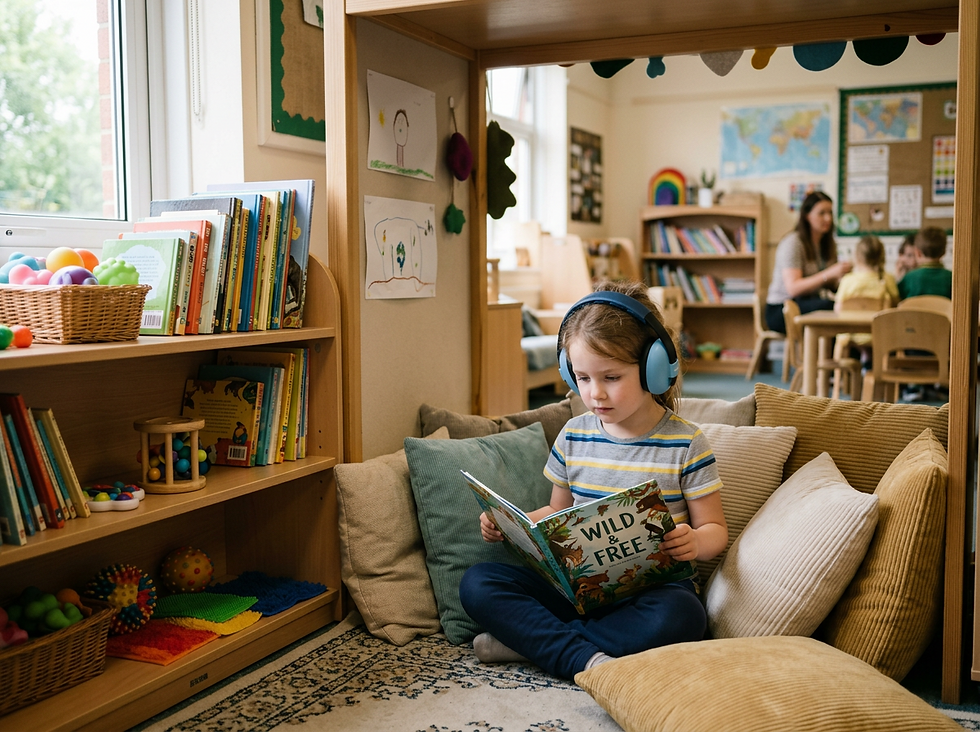
For schools, support might include sensory breaks, a quiet space, visual instructions, flexible uniform adjustments, safe lunchtime options, and staff training. A child should not have to reach crisis point before support is taken seriously.
For employers, reasonable adjustments can make a major difference. These might include written instructions, flexible working where possible, quieter workspaces, adjusted lighting, meeting agendas in advance, or permission to use noise-reducing headphones. Many autistic adults can thrive when energy is not wasted on needless performance.
For clinicians, careful assessment matters. A good autism assessment does not rely only on eye contact or a brief first impression. It takes developmental history, sensory experiences, social effort, camouflaging, mental health, and daily functioning into account. It also recognises that autistic people may have practised looking “fine” for a long time.
How Clinic Autism London can help
Clinic Autism London can offer a safe, informed space for children, young people, and adults who may be masking. The right support can help people understand their needs without shame and build a life that demands less constant performance.
Services may include:
Autism assessments for children and adults
A thorough assessment can explore social communication, sensory needs, routines, interests, masking, developmental history, and current day-to-day challenges.
Post-diagnostic support
A diagnosis can raise many questions. Support after diagnosis can help individuals and families understand what autism means for them in practical, personal terms.
Therapy and emotional wellbeing support
Autistic-informed therapy can help with anxiety, burnout, self-esteem, identity, and the emotional impact of years spent masking.
Parent and family guidance
Families can learn how to respond to distress, reduce demands, support communication, and create a home environment where the child can recover safely.
School and workplace advice
Clinicians can suggest reasonable adjustments and help explain needs in a way that schools, universities, and employers can understand.
Sensory and communication support
Depending on the clinic team, this may include input around sensory processing, speech and language, daily routines, and coping plans.
The value of a Clinic Autism London is not only the assessment itself. It is the chance to be heard by professionals who understand that autism can be quiet, hidden, and heavily camouflaged.
For families outside London, many clinics also offer parts of their support remotely, where clinically appropriate. This can make advice more accessible while still allowing for in-person assessment when needed.
Good support should never aim to make an autistic person appear non-autistic. It should help them feel safer, reduce distress, and build skills without erasing who they are.
A more accepting way forward
Masking in Autism The Silent Struggle of Fitting In for Children and Adults is not just a clinical topic. It is a human one. Behind the smile, the script, the forced eye contact, or the quiet compliance, there may be someone working very hard to be accepted.
Children should not have to collapse at home before their distress is believed. Adults should not have to burn out before their needs are recognised. Boys and girls, men and women, and people of all genders deserve support that sees beyond the mask.
Awareness is the first step. The next step is creating homes, schools, workplaces, and clinical spaces where autistic people do not have to hide so much of themselves to belong.
If masking is affecting a child, an adult, or a family, seeking specialist autism support from a Clinic Autism London can be a meaningful way to understand what is happening and what needs to change. The goal is not perfection. It is relief, self-understanding, and the freedom to be safely authentic.