Supporting Autistic Transitions ; Why Change Is Hard
A change that looks small from the outside can feel enormous to an autistic person. A different route to school, a supply teacher, a delayed train, a new food brand, a house move or the shift from one activity to another can all place heavy demands on the brain and body.
Transitions are part of daily life. They happen between places, people, routines, tasks, seasons and life stages. For autistic children, young people and adults, these moments can bring stress, confusion, shutdowns, meltdowns or intense anxiety. That response is not stubbornness or overreaction. It is often a sign that the person is working hard to process change, manage sensory input, understand expectations and stay regulated.
With the right support, transitions can become less frightening and more predictable. Families, schools and carers can make a real difference by planning ahead, communicating clearly and respecting the autistic person’s need for routine and recovery time.

Why transitions can be so hard for autistic people
Many autistic people rely on predictability to feel safe. Routine helps reduce uncertainty. It gives the day a clear structure and lowers the number of decisions the person has to process.
When something changes, several demands can happen at once. The person may need to:
Stop an activity before they feel ready
Understand what is happening next
Process new sensory information
Adjust to different people, places or rules
Cope with uncertainty about what will happen
Communicate distress while already overwhelmed
For some autistic people, the difficulty is not the change itself. It is the speed, lack of warning or unclear expectations around that change. A planned trip to the dentist may be manageable if it is explained, rehearsed and supported. A sudden appointment with no warning may feel impossible.
Transitions also vary in size. Some are everyday shifts, such as getting dressed, leaving the house or moving from screen time to dinner. Others are major life changes, such as starting nursery, moving to secondary school, beginning work, changing accommodation or going through puberty. Both types can be challenging.
Change can feel like losing control
Autistic people often work hard to make sense of the world. Familiar routines can act like anchors. When those anchors move, the person may feel unsafe or out of control.
This can lead to behaviours that others may misread. Refusing to leave the house may be a way of avoiding sensory overload. Asking the same question repeatedly may be an attempt to reduce uncertainty. Becoming upset when plans change may reflect genuine distress, not a desire to be difficult.
A helpful first step is to look beneath the behaviour and ask, “What is this transition demanding from this person right now?”
Sensory sensitivities can make change feel bigger
Sensory differences are a common part of autistic experience. Some autistic people are highly sensitive to noise, light, touch, smell, taste, temperature or movement. Others seek certain sensory input to feel calm and focused. Many people experience a mix of both.
Transitions often bring sensory change. Moving from home to a supermarket might mean bright lights, echoing noise, strong smells and unpredictable movement. Going from a quiet classroom to a busy playground might mean shouting, running, bells and physical contact. Even getting dressed can involve scratchy labels, tight waistbands or cold fabric.
When the sensory environment changes quickly, the nervous system may struggle to adjust. The person may become anxious, irritable, withdrawn or distressed.
Common sensory triggers during transitions include:
Loud school bells, hand dryers or traffic
Bright fluorescent lighting
Crowded corridors or public transport
Unexpected touch from other people
Strong smells from food, cleaning products or perfume
Changes in clothing, shoes or weather
New textures in food or personal care products
Sensory overload can build before it becomes visible. A child who seems calm during a busy outing may have a meltdown when they get home. An adult who copes at work may need hours of quiet afterwards. The transition may appear to be over, but the body may still be recovering.
Sensory preparation helps reduce pressure
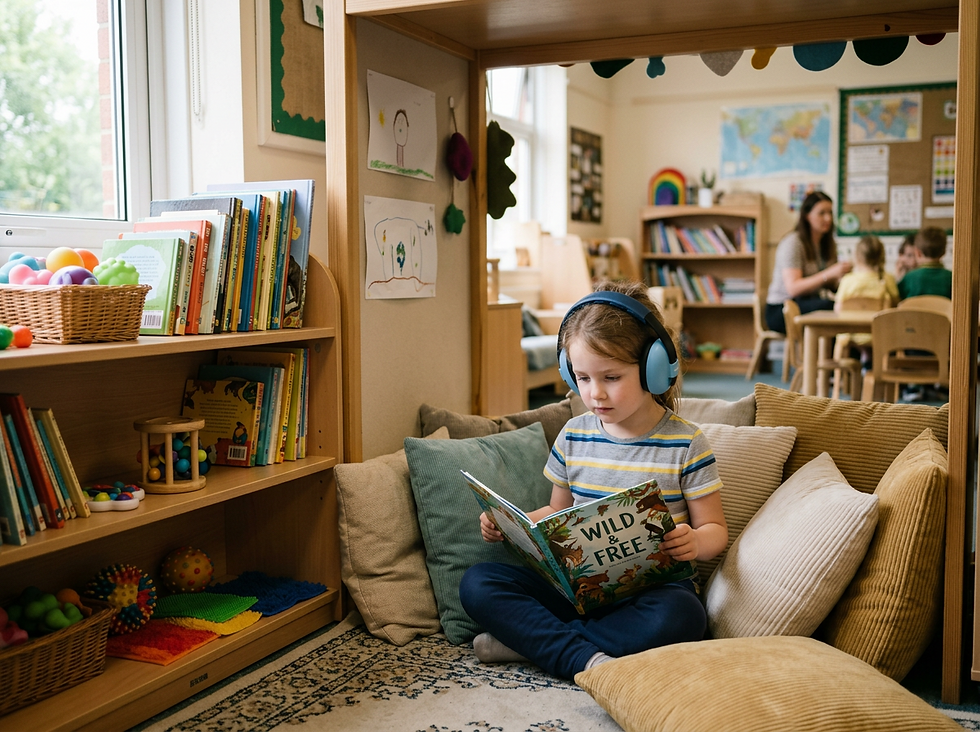
Small changes can help. Noise-reducing headphones, sunglasses, comfortable clothing, familiar snacks or a quiet space can make a transition more manageable. Some people benefit from movement before or after a change, such as jumping, walking, stretching or using a weighted blanket.
The goal is not to remove every challenge. The goal is to reduce unnecessary stress so the person has more capacity for the change that cannot be avoided.
Communication differences can affect transitions
Communication plays a major role in transitions. Many autistic people process language differently, especially when stressed. Spoken instructions may be too fast, too vague or too loaded with hidden expectations.
Phrases such as “We’re going soon” or “Just wait a minute” can be confusing. How soon is soon? How long is a minute? What happens after waiting? If the person does not understand the timing or sequence, anxiety can rise.
Some autistic people need extra time to process words. Some understand better through visuals, written information, gestures or demonstrations. Some may speak fluently in calm moments but lose speech or find it harder to answer questions when overwhelmed.
This can lead to misunderstandings during transitions. An adult may say, “Put your shoes on, get your bag and hurry up.” The autistic person may hear too many instructions at once. They may focus on one part, miss the sequence or freeze because the demand feels too large.
Clear communication can reduce this load.
Useful approaches include:
Use short, direct sentences
Say what will happen, not only what must stop
Give one instruction at a time
Allow processing time after speaking
Use visual schedules, written lists or timers
Avoid sarcasm, vague phrases and rushed explanations
Check understanding without turning it into a test
Instead of saying, “We need to get going now,” it may help to say, “In five minutes, we will put on shoes. Then we will walk to the car.” Some people also benefit from a visual countdown, such as five, three, one, finished.

The need for routine is a practical support
Routine is sometimes misunderstood as rigidity. For many autistic people, routine is a key way to manage energy, anxiety and sensory demands. It helps the person know what to expect and what is expected of them.
A routine can support:
Emotional safety
Independence
Sleep and eating patterns
Learning and attention
Reduced anxiety
Smoother family life
When routines change, the person may lose a coping tool. This is especially difficult if the change is unexpected or if the person has had little say in it.
That does not mean autistic people can never cope with change. Many can and do, especially when changes are introduced with care. Flexibility can be built slowly, but it should not be forced through distress. A person who feels safe is usually better able to adapt.
Predictability and flexibility can work together
A helpful approach is to keep some parts of the routine stable while gently preparing for changes in other parts. For example, if a child is starting a new school, the bedtime routine, breakfast and morning sensory supports can stay the same. This gives the child familiar anchors while they adjust to an unfamiliar setting.
Families can also introduce the idea that plans can change. A visual schedule might include a “change card” or “surprise card” for small, supported changes. This should be used carefully and not as a trick. The person needs to learn that change will be explained and supported, not sprung on them without care.
Practical strategies for supporting autistic transitions
No single strategy works for every autistic person. The best support starts with curiosity. What helps this person feel safe? What makes change harder? What signs show they are becoming overwhelmed?
The following strategies can be adapted for children, young people and adults.
Prepare early and be specific
Give as much warning as possible. For planned changes, start preparing in advance. This might include photos of a new place, a map of the route, a written plan, a calendar countdown or a social story.
Be clear about:
Where the person is going
Who will be there
What will happen first
What might be noisy, busy or different
How long it may take
What the person can do if they need help
When they can return to a familiar activity or place
For major transitions, such as moving school or starting a new job, repeated visits can help. Meeting key people, seeing toilets, entrances, lunch areas and quiet spaces can reduce uncertainty.
Use visual and written supports
Visual information stays available after spoken words disappear. This can be very reassuring.
Helpful tools include:
Now and next boards
Daily or weekly visual timetables
Written checklists
Countdown calendars
Timers
Choice boards
Photos of places, people and routines
For adults, a phone calendar, reminder app, travel note or written plan may serve the same purpose. The format should suit the person’s age, preference and communication style.
Build in transition time
Rushing often makes transitions harder. Extra time allows the person to finish, process and shift attention.
A transition warning might look like this:
“Ten minutes left.”
“Five minutes left.”
“One more turn.”
“Finished. Now shoes.”
“After the car, you can have your book.”
Some people need a physical bridge between activities. This might be carrying a favourite object, listening to a familiar song, using a fidget toy or following the same leaving routine each time.
Support regulation before making demands
If a person is already overwhelmed, more instructions may increase distress. Regulation needs to come first.
Support might include:
A quieter space
Reduced talking
Deep pressure if the person likes it
Breathing or movement
Access to a comfort item
Time away from bright lights or noise
A calm adult presence
During distress, long explanations rarely help. Use fewer words. Keep your tone steady. Offer simple choices where possible, such as “Quiet room or car?” rather than open-ended questions.
Offer choices where choices are real
Choice can reduce the feeling of being trapped. It also supports autonomy.
For example:
“Blue jumper or green jumper?”
“Walk to the car or scooter to the car?”
“Leave in two minutes or five minutes?”
“Headphones or sunglasses?”
Avoid offering a choice if there is only one acceptable answer. If leaving is non-negotiable, the choice can be about how to leave, not whether to leave.
Review what worked afterwards
After a transition, reflect when everyone is calm. For some people, this may be a conversation. For others, it may be drawing, rating feelings with numbers, pointing to emotion cards or using a written form.
Ask simple, respectful questions:
What was hard?
What helped?
What should we do next time?
Was anything too loud, too bright or too rushed?
Did the person know what was happening?
Over time, these reflections can reveal patterns. They can also help the autistic person understand their own needs and advocate for support.
How Clinic Autism London can help families
Families often know when transitions are difficult, but they may not know why or what to try next. It can be painful to watch a child or young person struggle with everyday changes, especially when advice from others focuses only on behaviour rather than the reasons beneath it.
Clinic Autism London can be a valuable resource for families seeking guidance and support around autism, transitions and daily challenges. A specialist service can help families better understand an autistic person’s sensory profile, communication needs, routines, anxiety triggers and strengths.
Support may include guidance on preparing for school changes, improving daily routines, understanding meltdowns or shutdowns, and creating practical plans that fit real family life. For many families, having a knowledgeable professional listen carefully and explain what may be happening can bring relief and direction.
The phrase Supporting Autistic Transitions Why Change Is Hard and How Clinic Autism London Can Help points to a simple but powerful idea: transitions become easier when support is based on understanding, not pressure.
When seeking help, families can ask for advice that is tailored to the individual, not a one-size-fits-all plan. Useful support should respect the autistic person’s communication style, sensory needs, preferences and dignity.
This article is for general information only and is not a substitute for personalised clinical advice. If transitions cause frequent distress, affect safety or disrupt daily life, professional guidance can help build a clearer plan.
A calmer path through change
Autistic transitions can be difficult because change often brings uncertainty, sensory demands, communication pressure and loss of routine all at once. When these needs are understood, support becomes more compassionate and more effective.
The most helpful strategies are often practical and consistent. Prepare early. Use clear language. Show what will happen. Reduce sensory stress. Allow time. Offer real choices. Support regulation before expecting cooperation.
Progress may look small from the outside. A calmer school run, a shorter recovery time after an outing, a young person asking for headphones before overload, or an adult using a written plan for a new appointment can all be meaningful steps.
Change may never be effortless, but it can become safer, clearer and more manageable. With patient support and guidance from resources such as Clinic Autism London, autistic individuals and their families can face transitions with more confidence and less fear.