Understanding the Challenges Autistic Children Face in UK Mainstream Schools
For many autistic children, a mainstream school day can feel like trying to learn while the volume is too high, the lights are too bright, the rules keep changing, and everyone else seems to understand a language no one has explained.
Mainstream schools can be warm, skilled, inclusive places. Many autistic pupils thrive in them, especially when staff understand their needs and support is planned well. Yet too many children still spend their school years feeling overwhelmed, misunderstood, or punished for needs they cannot simply “grow out of”.
In the UK, the conversation around autism in schools often focuses on access to support, Education, Health and Care Plans, waiting lists, and funding. Those issues matter. But day-to-day inclusion also depends on smaller moments: how a teacher responds to distress, whether a child has a quiet place to recover, how flexible the school is about uniform, lunch, transitions, friendships, and communication.
This post explores the common challenges autistic children face in UK mainstream schools, with insights from parents and educators, and practical strategies that can help create a more inclusive environment.

Sensory overload can turn an ordinary school day into a major challenge
Mainstream schools are busy sensory environments. Corridors echo. Bells ring. Chairs scrape. Fluorescent lights flicker. Dinner halls smell strongly of food and cleaning products. PE lessons can involve whistles, shouting, and unpredictable movement. Even a “normal” classroom can feel intense when displays cover every wall and several conversations happen at once.
For some autistic children, these sensory experiences are not just irritating. They can be painful, disorientating, or exhausting. A child who seems distracted may be trying to block out the hum of a projector. A pupil who refuses to enter the hall may be reacting to noise, smell, crowding, or fear of being pushed. A child who melts down after lunch may have used every bit of energy to hold it together through a loud, chaotic break.
Educators often notice the behaviour first. They may see a pupil hide under a table, bolt from the classroom, cover their ears, rip off a jumper, or become withdrawn. Parents often see the other half of the picture at home: the child who appears “fine” at school but collapses at the front door, refuses to go in the next morning, or becomes distressed over tiny changes because they have no capacity left.
This is why sensory needs should not be viewed as preferences or “fussiness”. They are part of how a child experiences the world.
Practical support can include:
A sensory profile
Schools can work with parents, occupational therapists where available, and the child to identify triggers and helpful adjustments.
Access to quieter spaces
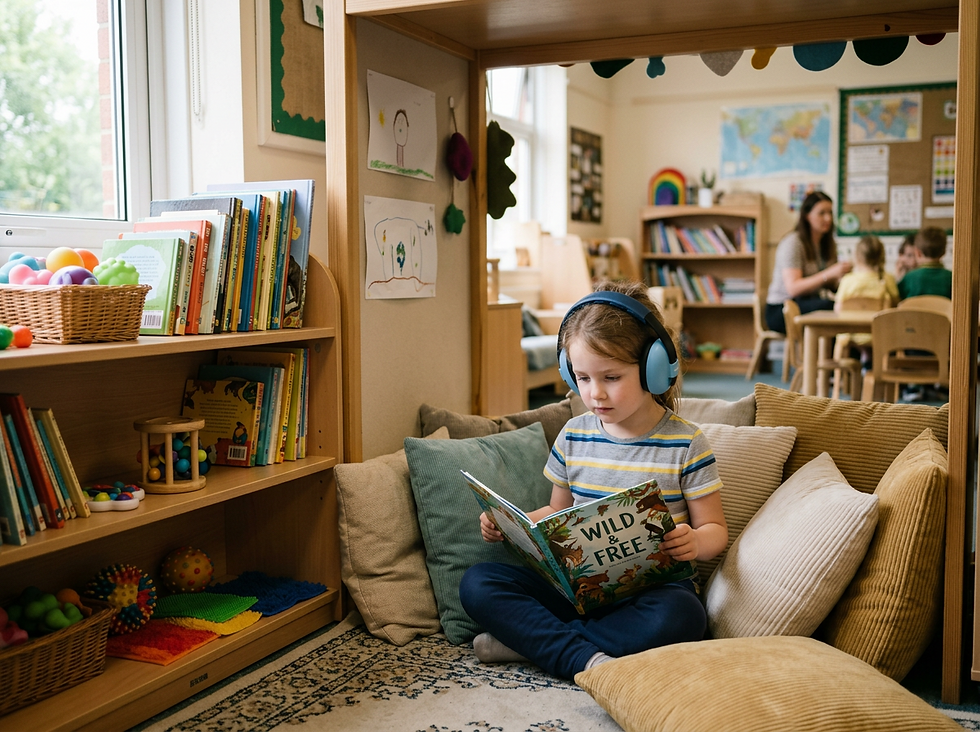
A calm room, library corner, or agreed safe place can prevent overwhelm from becoming a crisis.
Reasonable flexibility
Some pupils may need ear defenders, movement breaks, a different lunch arrangement, permission to leave lessons early, or adaptations to uniform.
Predictable routines
Visual timetables, now-and-next boards, and advance warning of changes can reduce anxiety.
Small adjustments often make a big difference. A pupil who cannot manage the dinner hall may eat happily in a quieter group. A child who struggles with assemblies may attend part of the session or sit near an exit. Inclusion does not always mean doing everything in the same way as everyone else. Often, it means giving each child a fair route into learning and belonging.
Social interaction can be confusing, tiring, and easily misunderstood
School is not just academic. It is also a social world full of unwritten rules. Children are expected to read facial expressions, understand jokes, manage group work, take turns, cope with teasing, spot sarcasm, and know when a friendship is going well or badly.
For autistic children, this can be hard work. Some may want friends but struggle to start or maintain conversations. Some may prefer to play alone and feel pressured by adults to socialise in ways that do not suit them. Some may talk at length about a special interest and miss signs that another child wants to change topic. Others may be highly aware of social rules but anxious about getting them wrong.
Misunderstandings can build quickly. A pupil who answers honestly may be seen as rude. A child who walks away from a noisy group may be seen as antisocial. A pupil who corrects others may be labelled bossy. When adults interpret these moments only through a behaviour lens, the child’s real need can be missed.
Parents often describe the pain of watching their child come home confused by playground dynamics. They may hear questions such as, “Why did they say I could play and then run away?” or “How do I know if someone is joking?” Some children become isolated. Others mask their confusion by copying peers, laughing at the wrong moments, or staying silent.
Teachers and teaching assistants can help by making social expectations clear rather than assuming children will absorb them naturally. This may involve:
teaching playground games explicitly
pairing pupils carefully for group work
using social stories or comic strip conversations
creating structured lunchtime clubs around shared interests
supporting peers to understand difference in age-appropriate ways
watching for bullying that may be subtle or repeated
Peer education needs care. Autistic pupils should not be singled out or made responsible for explaining themselves. A whole-class culture of respect works better: everyone communicates differently, everyone has strengths, and everyone deserves kindness.
There is also a balance to strike. Social support should not force autistic children to act less autistic. Eye contact, small talk, and constant group participation are not the only signs of engagement. A child can be listening while looking away. A child can be happy with one trusted friend rather than a large group. A child can belong without being made to perform a version of “normal” that costs them too much.

Individualised support is essential, not a special favour
Autistic children are not all the same. One pupil may be highly verbal but unable to cope with changes to routine. Another may communicate through gestures, symbols, or a device. One child may excel in maths but find handwriting painful. Another may understand the lesson but be unable to show it in a busy, timed task.
This is why individualised support matters. Generic autism awareness is useful, but it is not enough. Staff need to know the child in front of them.
In UK mainstream schools, support may involve the class teacher, special educational needs coordinator, teaching assistants, pastoral staff, outside professionals, and family members. Some children receive SEN Support. Some have an Education, Health and Care Plan. Others may be waiting for assessment or may not yet have a diagnosis, but still need help.
A common frustration from parents is that support can feel reactive. Their child has to fail, refuse, run, cry, or stop attending before adults recognise the level of need. Educators, on the other hand, often describe the pressure of large classes, limited time, and stretched support services. Both perspectives can be true. The child still needs support early, consistently, and without blame.
Good individualised support usually starts with a few clear questions:
What helps this child feel safe enough to learn?
What triggers distress, withdrawal, or shutdown?
How does this child communicate discomfort?
What strengths and interests can support learning?
Which demands are essential, and which can be adapted?
What does the family know that school has not yet seen?
The best plans are practical. They do not sit in a folder untouched. They show staff what to do on a Tuesday morning when the timetable changes, the classroom is noisy, and the pupil is beginning to panic.
Support might include visual instructions, reduced copying from the board, alternative ways to record work, extra processing time, a trusted adult check-in, movement breaks, clear seating plans, or a safe exit card. For some pupils, it may include carefully planned attendance adjustments or support during transitions between year groups or schools.
The word reasonable matters in UK education, especially when discussing adjustments. But reasonable does not mean minimal. For an autistic child, the right adjustment can be the difference between learning and distress, attendance and school refusal, confidence and shame.
Behaviour is often communication
One of the biggest shifts a mainstream school can make is to look beyond behaviour and ask what it means.
A child who refuses to write may be anxious about mistakes, struggling with fine motor skills, or unable to organise ideas quickly enough. A child who shouts may be overloaded. A child who leaves the classroom may be trying to escape a sensory trigger. A pupil who seems “defiant” may not understand the instruction, may need more processing time, or may be afraid of failing in front of peers.
This does not mean schools should ignore unsafe behaviour. It means responses should reduce risk while also addressing the cause. Sanctions alone rarely teach a dysregulated child the skills or safety they need. In some cases, they add shame and make the next incident more likely.
Many educators already understand this. Teachers and support staff often work hard to spot early signs of distress: a change in posture, repeated questioning, silence, pacing, or a fixed look. When staff know a child well, they can step in before the situation escalates.
Parents can offer valuable insight here. They may know that a child goes quiet before a shutdown, or that a certain phrase increases panic, or that hunger and noise make everything harder after lunch. Schools may see the academic setting, but families see patterns across sleep, travel, home routines, and recovery after school.
A joined-up approach helps everyone. Short, regular communication can be more useful than long meetings held only after a crisis. A home-school book, email update, or agreed check-in can help adults spot patterns without overwhelming staff or parents.
When behaviour is treated as communication, the question changes from “How do we stop this?” to “What is this child telling us, and how can we help?”
That shift does not remove boundaries. It makes boundaries clearer, kinder, and more effective.
Schools become more inclusive through culture, not just paperwork
Policies matter. Training matters. Plans matter. But children feel inclusion through daily practice.
An inclusive mainstream school does not expect every autistic child to fit one model of learning, communication, or friendship. It builds flexibility into ordinary routines. It listens to parents without treating them as difficult. It takes children seriously when they say something hurts, scares them, or feels impossible. It sees strengths as well as needs.
Some useful whole-school strategies include:
Autism-informed staff training
Training should include sensory needs, communication differences, masking, anxiety, and practical classroom adjustments.
Consistent routines across the school
Predictability helps many pupils, not only autistic children. Clear starts, endings, and transitions reduce stress.
Low-arousal spaces and responses
Calm voices, reduced public confrontation, and quiet recovery spaces can prevent escalation.
Flexible approaches to participation
Pupils may show learning through speaking, drawing, typing, choosing, demonstrating, or working with an adult.
Protected unstructured times
Break and lunch can be the hardest parts of the day. Clubs, quiet zones, and supported play can help.
Respect for autistic identity
Language should be respectful, strengths-based, and guided where possible by the child and family’s preferences.
Inclusion also means planning for transitions. Moving from nursery to reception, primary to secondary, or one classroom to another can be a major source of anxiety. Extra visits, photos of key staff, maps, social stories, and gradual introductions can make change less frightening.
Secondary school brings extra challenges: more teachers, more rooms, heavier homework demands, busier corridors, and greater social complexity. A pupil who coped in primary may need new support in Year 7. That is not regression. It is a response to a more demanding environment.

Parents and educators need to work as partners
The strongest support often comes when schools and families trust each other. That trust can be fragile, especially if a child has already had negative experiences.
Parents may arrive at meetings tired from battles for recognition, anxious about attendance letters, or worried their child is being labelled as naughty. Teachers may feel under pressure, short on resources, and unsure how to meet complex needs in a full classroom. Both sides may feel judged.
Partnership starts with listening. Parents are experts in their child. Educators are experts in teaching and school systems. The child, where possible, should also have a voice. Even young children can often show what helps through choices, drawings, rating scales, or simple questions.
Useful conversations focus on specifics:
What does distress look like for this child?
Which parts of the day are hardest?
What has helped before?
What should adults avoid saying or doing?
How will school tell home about concerns early?
How will success be measured beyond behaviour points or test scores?
Success may look like staying in class for an extra ten minutes, eating lunch without distress, asking for a break before panic rises, joining a club linked to an interest, or coming home with enough energy to play. These are meaningful steps.
It is also vital to celebrate strengths. Many autistic children bring deep focus, honesty, creativity, strong memory, pattern recognition, humour, fairness, and intense curiosity. When school only talks about difficulties, children absorb that message. When adults notice strengths, pupils are more likely to see themselves as capable learners.
A more understanding school experience is possible
The challenges autistic children face in mainstream schools are real, but they are not fixed. Sensory overload can be reduced. Social confusion can be supported. Individualised plans can move from paper into daily practice. Behaviour can be understood as communication. Parents and educators can work together, even when resources are tight.
A more inclusive school does not need every answer straight away. It needs curiosity, consistency, and a willingness to adapt. The most helpful question is often simple: “What is this child experiencing, and what can we change?”
When mainstream schools respond with empathy and practical support, autistic children are more likely to feel safe, understood, and able to learn. That benefits the whole school community, because inclusion done well does not lower expectations. It gives more children a fair chance to meet them.